


Changes at the Patent Trial and Appeal Board (“PTAB”) since early 2025 have significantly altered the landscape for patent challenges in a more pro-patent direction, with control of proceedings increasingly centralized with the U.S. Patent and Trademark Office (“PTO”) Director. With institution rates plummeting and institution decisions losing all transparency, inter partes review (“IPR”) petitions have rapidly declined. We discuss the changes that have been made by PTO Directors Stewart and Squires and the impact they’ve had on America Invents Act (“AIA”) proceedings, including institution rates, filings, settlements, and reexaminations, with a particular focus on the pharmaceutical field and the outlook for the future.
Timeline of Changes: Directors Stewart and Squires
Interim Director Coke Morgan Stewart was appointed January 20, 2025. On February 28, 2025, she rescinded former Director Vidal’s 2022 memorandum relating to discretionary denials that elevated “compelling merits” considerations and solidified Sotera stipulations as safe harbors to avoid discretionary denials. On March 26, 2025, a new procedure was instituted that elevated discretionary denial considerations and began the precipitous drop in institution rates. The new procedure bifurcates institution decisions, with initial consideration of discretionary factors done by the Director after a separate briefing, followed by a review on the merits by the Board’s administrative patent judge panel, if the Director does not deny institution for discretionary reasons. Director Stewart also introduced new discretionary considerations, including the “settled expectations” of the parties, which has since been used to deny petitions challenging patents that have been in force for more than about six years.
The changes continued when current Director John Squires was appointed on September 22, 2025. His first action was to issue a Notice of Proposed Rulemaking relating to serial and parallel IPR challenges on October 17, 2025. While the rule has not yet been finalized, it shows the direction the Office is working toward, which is to minimize serial and parallel patent challenges.
The notice included a new stipulation requirement, more stringent than a Sotera stipulation, that would require every IPR petitioner, real party in interest, and privy to file a stipulation agreeing not to pursue any invalidity challenge under 35 U.S.C. §§ 102 or 103 in the district court or International Trade Commission (“ITC”) if the IPR is instituted. It also set forth guidelines on when an IPR would be denied institution, stating that the USPTO would not institute an IPR if it (through another IPR, post grant review (“PGR”), or reexam) or another forum (district court, Federal Circuit, or the ITC) had already determined the claim (or an independent claim from which it depends) was not invalid, or if another proceeding is “more likely than not” to determine validity before the IPR would conclude, even if the petitioner is not the challenger in that proceeding. The Director could still decide to institute an IPR in exceptional circumstances, including bad faith in the prior proceeding or changes in statute or Supreme Court precedent. New or additional prior art, expert testimony, case law (other than Supreme Court precedent), or legal arguments, or a prior challenger’s failure to appeal would not be considered exceptional circumstances that would warrant institution. The proposed rule received 11,442 comments which are currently undergoing review.
The same day, Director Squires implemented a new procedure where the Director would issue summary notices granting / denying institution absent “novel or important factual or legal issues” after consulting at least three PTAB judges. Since the end of October 2025, the majority of institution decisions have been issued in bulk orders without opinions explaining the reasoning for institutions or denials.
On March 11, 2026, Director Squires added new economic discretionary considerations allegedly aimed at protecting U.S. manufacturing and investment. In determining whether to institute an IPR or PGR, the Director will now consider whether accused products in any parallel proceeding are manufactured in the U.S. or are tied to investments in American manufacturing operations, whether the patent owner’s competing products are manufactured in the U.S., and whether the petitioner is a small business that was sued for infringement.
Since taking office, Director Squires has issued a number of precedential opinions, many of which are consistent with his pro-patent posture. Most recently he designated as precedential his discretionary denial decision in Magnolia Medical Technologies v. Kurin, IPR2026-00097, Paper 17 (May 14, 2026) and extended the deadline for filing Director Review requests in Light & Wonder, Inc. v. Evolution Malta Ltd., IPR2025-01072, -01073, -01078, Paper 30 (June 22, 2026). In Magnolia, he reaffirmed the use of existing discretionary denial considerations, such as settled expectations, prior litigation, and public interest, after expressing concern that AIA proceedings are not being used as the intended alternative to district court proceedings but instead are being used in addition to them and are expanding costs and time to resolution. In a sua sponte Director Review decision in Light and Wonder, he extended the deadline for filing Director Review requests for institution decisions to 30 days (from 14 days) and identified exceptional circumstances for further extending the deadline. In Light and Wonder he vacated the institution decision because the district court had already found the challenged claims invalid under other grounds, despite there still being an opportunity to appeal that decision to the Federal Circuit.
Settled Expectations
Discretionary denials have significantly increased during the tenure of Directors Stewart and Squires, in part due to new factors that are now being taken into consideration. One of the factors that has been central to many IPR[1] decisions is the “settled expectations of the parties, such as the length of time the claims have been in force.” Based on subsequent decisions, this has evolved to mean that for patents that were granted approximately six or more years prior to the challenge, the settled expectations of the patent owners in their valid claims would weigh against institution of the IPR.
Consideration of this factor may act to essentially insulate some pharmaceutical patents from IPR challenges given that patent applications, particularly those with compound/composition of matter claims, are often filed early on in pharmaceutical development and the resulting patents would have been in force for more than six years at the time when generics and biosimilars would start to challenge them. Moreover, requiring a drug developer to challenge a patent early in its lifecycle, most likely long before a drug has been advanced to clinical testing, makes it more difficult, if not impossible, to ensure that the challenger will have standing for appeal of an adverse merits decision.
An early example of settled expectations contributing to discretionary denials of IPRs challenging biologic drug[2] patents was in July 2025 in Amgen’s IPR2025-00601, -00602, and -00603 challenging three of Bristol-Myers Squibb’s method of treatment patents related to Opdivo® (nivolumab). While Amgen challenged these patents early in biosimilar development, prior to filing an aBLA and prior to a BPCIA litigation, two were denied. Although the opinions were based on a totality of the arguments, the “strong settled expectations of the Patent Owner” seemed to be given significant weight in denying IPR2025-00601 and -00602, which challenged patents that had been in force for six and seven years respectively. IPR2025-00603 was not denied for discretionary reasons, at least in part because the challenged patent had only been in force for three years. At the time, the Director’s focus on this issue was somewhat surprising as it was not a main argument in the briefing and was only alluded to by the Patent Owner in a few sentences and a parenthetical citation.[3]
In the Orange Book context, Apotex’s IPR2025-00514 against Alkermes’ patent related to Vivitrol® (naltrexone) and Empower Clinic Services’ IPR2025-01024 against Eli Lilly’s patent related to Mounjaro® / Zepbound® (tirzepatide) were denied in part because of the settled expectations of the Patent Owners in their patents that had been in force for 14 and 9 years respectively. Apotex’s IPR challenged method of treatment claims, and Empower Clinic’s IPR challenged compound, composition, and method of treatment claims.
Impact on Institution Rates
Prior to Director Stewart, institution rates for AIA proceedings had been steady for quite some time, with petitions instituted around two thirds of the time across technologies. However, after the changes made by Directors Stewart and Squires, institution rates have reversed, with only about one third of petitions now being instituted (see Figure 1).
For pharmaceuticals, institution rates have not been as steady, in part because the number of petitions is quite low. In FY26 institution rates are nearly the same for Bio / Pharma[4] patents as they are for IPRs across all technologies (38% and 37% respectively) and are at their lowest levels since inception. For biologic drug IPR petitions, although the number is small, a steep decrease in institution rates has also been seen, with only a single petition in FY25-FY26 being instituted, compared to an 80-100% institution rate in FY22-FY24.
Orange Book patent IPRs have not seen the decreased institution rate that has been observed across other technologies, although it is difficult to observe trends because like biologic drug IPRs, the number of petitions has been very small in recent years (11-12 institution decisions in each of FY23-FY25 and eight institution decisions in FY26 through July 2026). Of the eight Orange Book IPR institution decisions in FY26, 75% were instituted. However, five of the six instituted challenges were between the same parties on similar patents, so this higher institution rate may just be related to the particular patents challenged and may not be a broader trend for Orange Book patents. Interestingly, three of the four challenged patents were granted more than six years prior to the IPRs, which has many times led to a decision denying institution. The sixth decision instituting an Orange Book IPR was granting joinder to a previously instituted IPR. The two denied IPRs challenged patents that had been granted more than six years before the IPR. One of the opinions specifically discussed the Patent Owner’s settled expectations after the patent was in force for nine years, and the other IPR was denied in a bulk opinion without explanation.
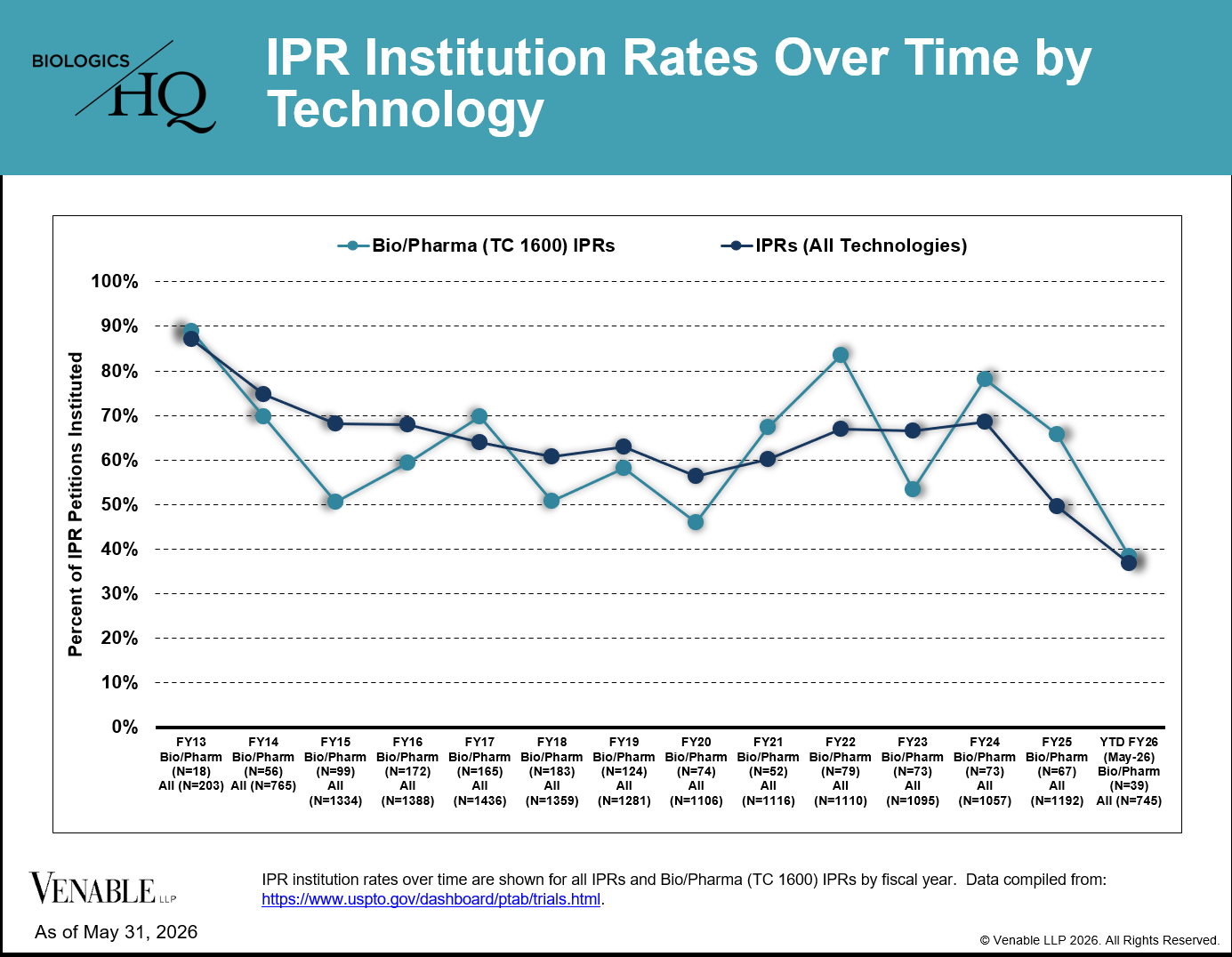
[Figure 1: IPR institution rates over time are shown for all IPRs and Bio / Pharma (TC 1600) IPRs by fiscal year. Data compiled from Patent Trial and Appeal Board (PTAB) Dashboard | USPTO as of May 31, 2026.]
In addition to the institution rates lowering, the vast majority of institution decisions are now issued in bulk orders without any discussion of the merits. This lack of transparency on reasons for institution or denial fundamentally changes IPR strategies. For example, without an opinion, it is difficult to file a request for rehearing, as it is unclear what may have been misapprehended or overlooked. If the petition is instituted, there is no transparency regarding the strongest and weakest arguments that may guide the parties on where to focus their arguments during the rest of the trial.
Under 35 U.S.C. § 314(d), “the determination by the Director whether to institute an inter partes review … shall be final and nonappealable.” However, a number of parties have attempted to challenge the recent institution decisions through mandamus petitions. Thus far, every Federal Circuit decision has denied their petitions. The decisions have reiterated that mandamus petitions cannot be used to circumvent the statutory prohibition on appellate review of institution decisions and that the PTO Director has broad discretion over institution decisions. While the Federal Circuit has left open the possibility that “colorable constitution claims” may be reviewable, it has not yet found that the cases have raised such claims. Additionally, in Apple Inc. v. Squires (No. 24-1864), the Federal Circuit found that because the Director’s guidance on discretionary denial factors such as “settled expectations” is a general policy statement, not a legislative rule, notice-and-comment rulemaking was not required under the Administrative Procedure Act (“APA”).
The fight over the application of “settled expectations” to deny IPR institutions is currently at the Supreme Court. In Google LLC v. VirtaMove, Corp., Docket No. 25-1230 (filed April 27, 2026) the Supreme Court will decide whether to take up the questions of “[w]hether the PTO lacks statutory authority to deny institution based on ‘settled expectations’ where the patent statutes allow for administrative review at any time during the life of a patent; and [w]hether courts have power to review a PTO decision denying inter partes review on grounds that are contrary to statute.” Briefing is pending and seven amicus briefs have been filed.
In Kahoot! AS v. Interstellar Inc. (docket number pending, filed July 24, 2026), the Supreme Court will decide whether to take up similar questions of “[w]hether the PTO lacks statutory authority to deny inter partes review institution based on ‘settled expectations’ premised on a patent’s age where Congress prescribed express timing limits for inter partes review based on a patent’s minimum age (which is tied to the expiration of the statutory period for seeking post-grant review, a separate type of patent validity challenge) but imposed no maximum patent age bar.; and [w]hether 35 U.S.C. § 314(d) bars judicial review, even by way of mandamus, of whether the PTO exceeded its statutory authority when denying inter partes review institution on grounds that are contrary to the statute.” Kahoot! has asked the Court to consolidate the two cases or alternatively hold its petition for Google.
While in both cases, the Federal Circuit denied mandamus petitions, the facts are somewhat different, with Google challenging a patent that had been in force for over 14 years, and Kahoot! challenging a patent that was in force for less than six years when the petition was filed, but more than six years at the time of the institution decision. These cases will be closely watched to see whether the current procedures will remain at the PTAB absent a new Director.
Impact on Filings
The impact of the decreased IPR institution rate can be seen in the drop in filings to less than a fifth of the pre-Stewart/Squires levels (see Figure 2). Within about six months of Director Stewart’s changes to discretionary denial, petitions started decreasing, and they decreased further after Director Squires started issuing bulk institution decisions. At their lowest, only 15 IPR petitions were filed in a month, compared to about 90-130 per month prior to the Stewart/Squires changes at the PTAB.
Compared to IPRs, PGRs have remained relatively steady (see Figure 2). This is possibly because the discretionary denial factors, such as settled expectations of the patent owner, have not impacted them in the same way. There has not been a shift from using IPRs to PGRs, most likely because of the limited time frame in which PGRs can be filed (9 months post-patent grant). PGRs also have greater estoppel affect than IPRs, which may deter some petitioners from seeking this route of patent challenge.
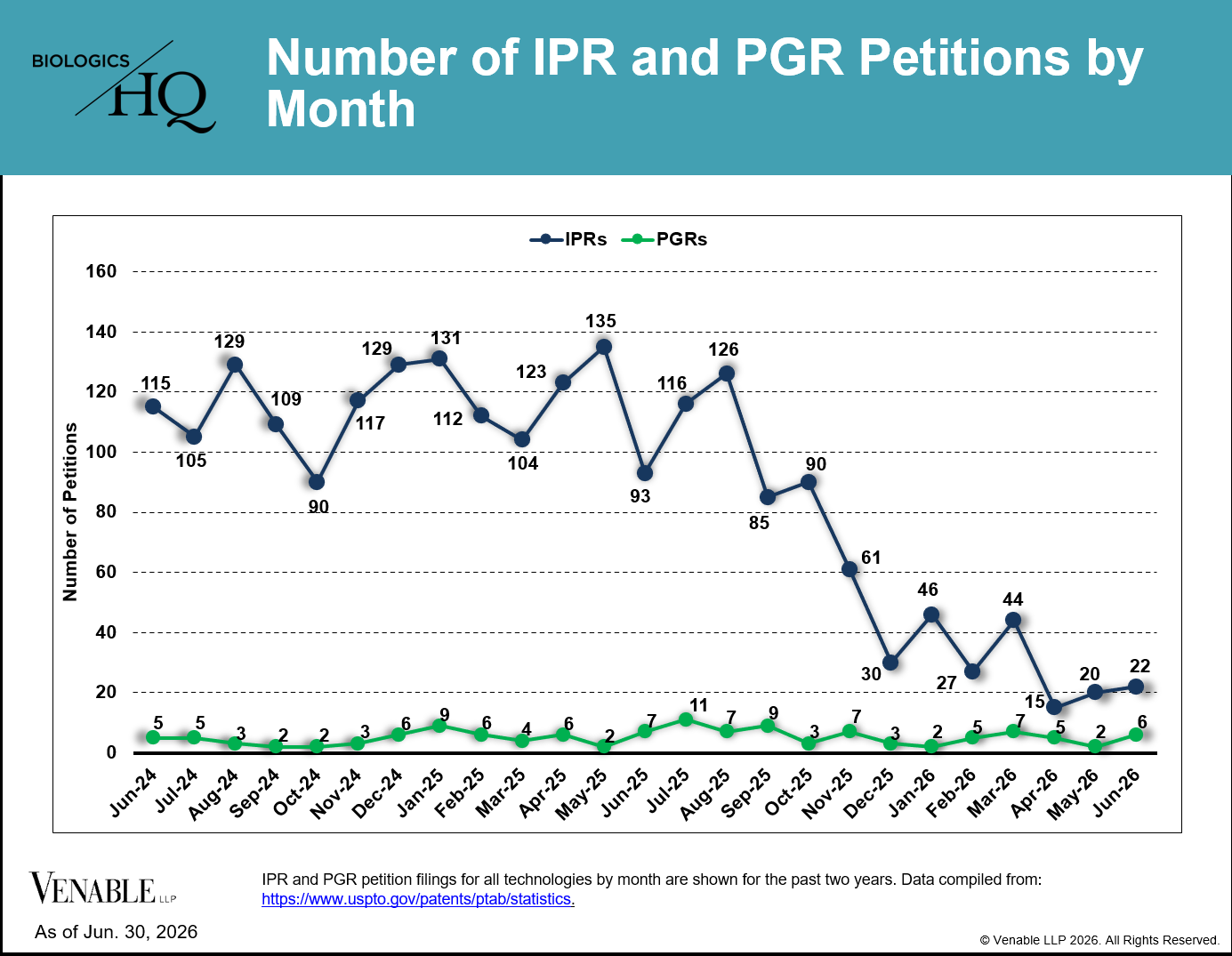
[Figure 2: IPR and PGR petition filings for all technologies by month are shown for the past two years. Data as of June 30, 2026 from Statistics | USPTO.]
Looking specifically at pharmaceutical patent IPRs (see Figure 3), we have seen a greater impact on Orange Book patent challenges than biologics. As of July 15, 2026, there was only a single Orange Book patent IPR filed in FY26, down from 7-16 petitions per year from FY22-25. In contrast, biologic drug IPR filings remained relatively steady from previous years: 20 in FY23, 13 in FY24, eight in FY25, and eight in FY26 through July 15. Overall, Bio / Pharma IPR petitions are down in the first eight months of FY26, with only 15 filings compared to 64-80 in the previous six fiscal years[5]. This is likely to be the lowest number of Bio / Pharma IPR petitions filed in a fiscal year since their inception.
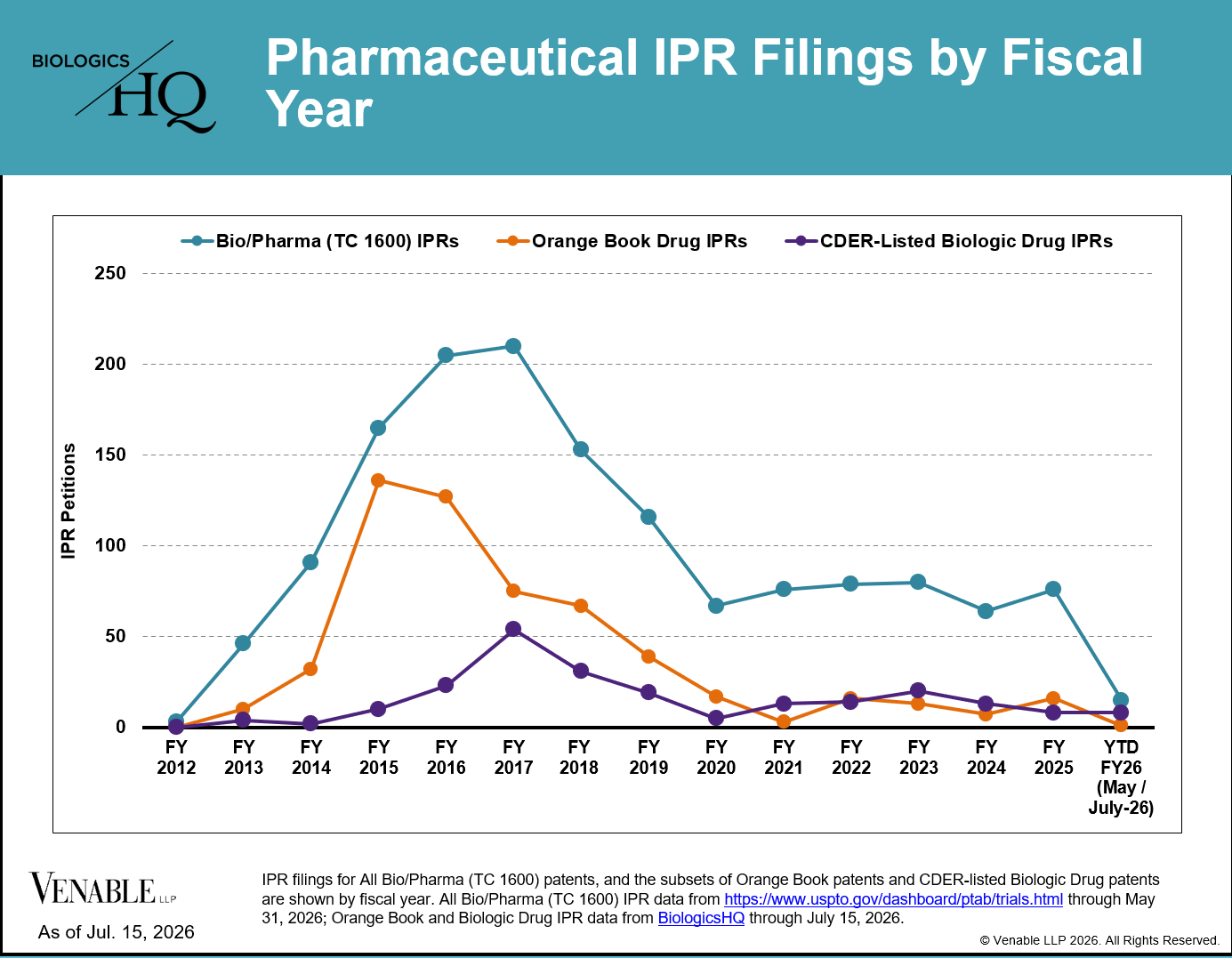
[Figure 3: IPR filings for All Bio / Pharma (TC 1600) patents, and the subsets of Orange Book patents and CDER-listed Biologic Drug patents are shown by fiscal year. All Bio / Pharma (TC 1600) IPR data from PTAB through May 31, 2026; Orange Book and Biologic Drug IPR data from BiologicsHQ through July 15, 2026.]
Impact on Settlements
The changes at the PTAB also appear to have impacted settlements. While the proportion of pre- and post-institution settlements has remained about the same, with slightly more cases settling post-institution, the percentage of trials that settle has decreased to half of previous levels (see Figure 4). The decrease began in FY25 when Director Stewart assumed the office, and then further dropped to 14% in FY26. While the reasons for this are not completely clear, some possibly reasons could be the lack of transparency affecting parties’ ability to determine the strength of their cases and changing dynamics of leverage due to the lowered institution rates. Patent owners may be less likely to settle pre-institution now given the low institution rates, and petitioners may be less likely to settle post-institution due to a perceived strength of their IPR given it was instituted.
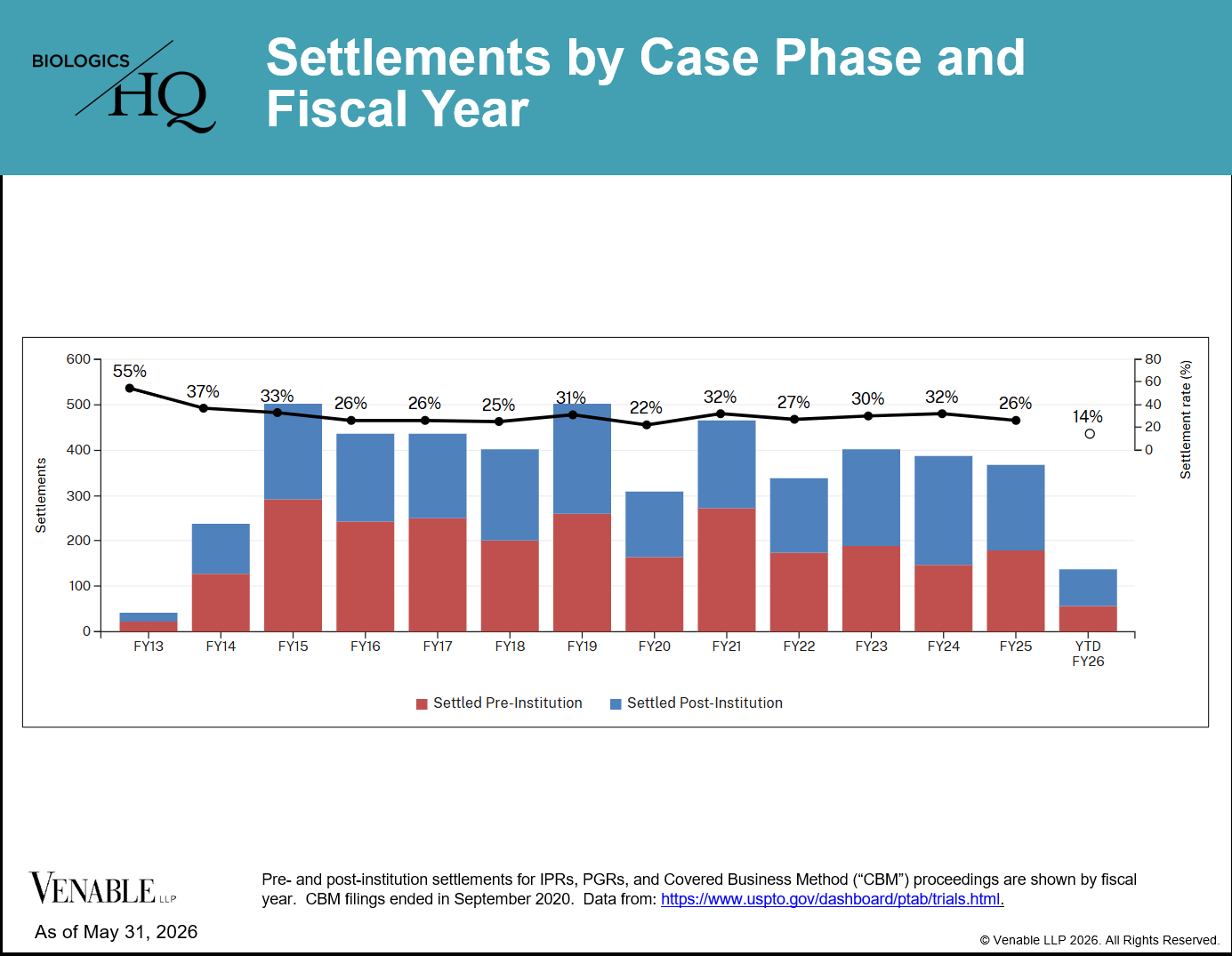
[Figure 4: Pre- and post-institution settlements for IPRs, PGRs, and Covered Business Method (“CBM”) proceedings are shown by fiscal year. CBM filings ended in September 2020. Data as of May 31, 2026 from Patent Trial and Appeal Board (PTAB) Dashboard | USPTO.]
Overall Effects
In addition to the shift in institution rates, there has also been a slight shift in the outcomes of Final Written Decisions (“FWDs”), with more patents surviving with at least some claims being found not unpatentable under Directors Stewart and Squires (see Figure 5).
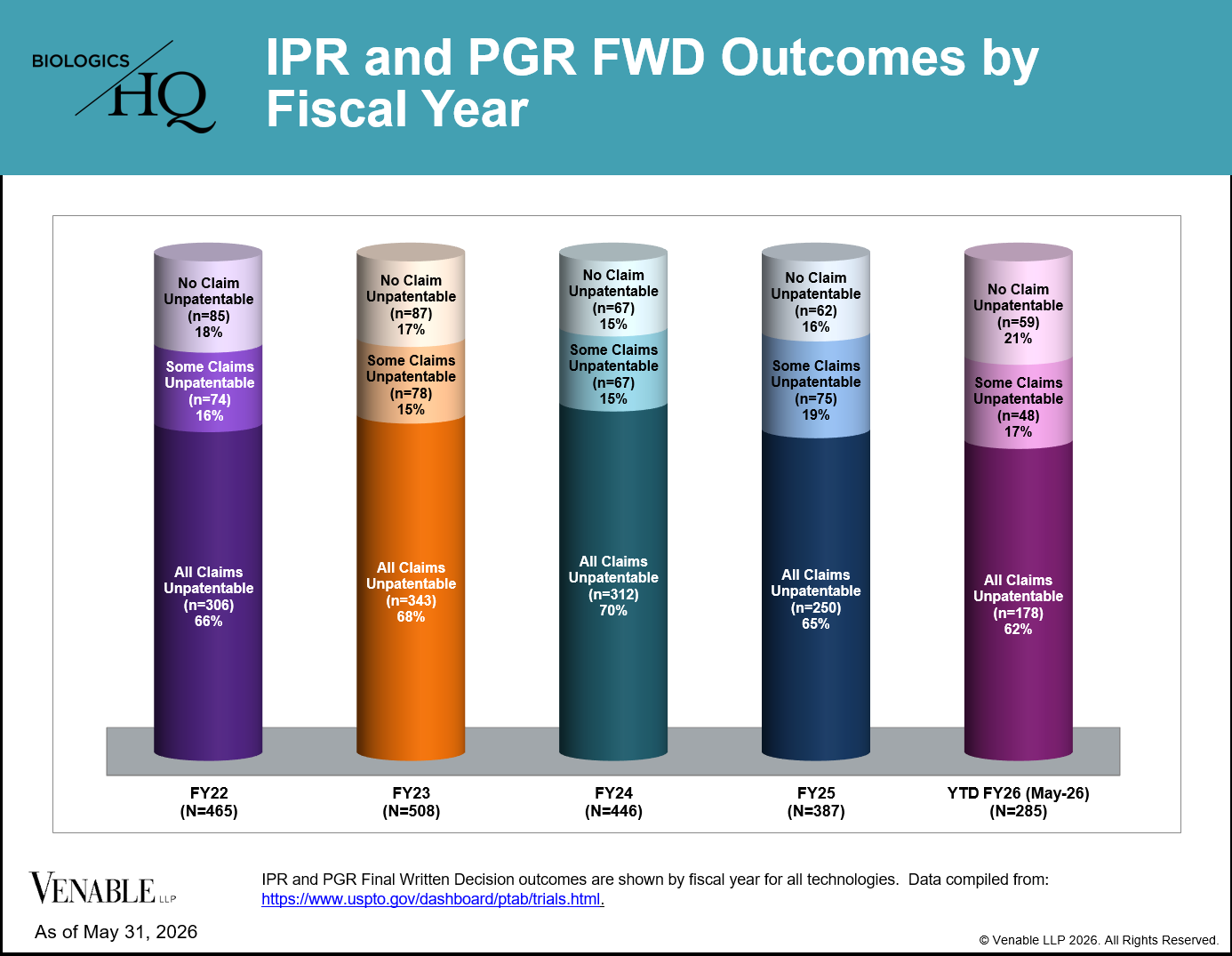
[Figure 5: IPR and PGR Final Written Decision outcomes are shown by fiscal year for all technologies. Data compiled from Patent Trial and Appeal Board (PTAB) Dashboard | USPTO through May 31, 2026.]
Overall, the changes at the PTAB have favored patent owners, with a lower likelihood of losing patent claims in AIA proceedings (see Figure 6). In the years prior to the Stewart/Squires takeover, 35-39% of petitions resulted in decisions finding all of the challenged claims unpatentable. This has now decreased to 23% in the current fiscal year.
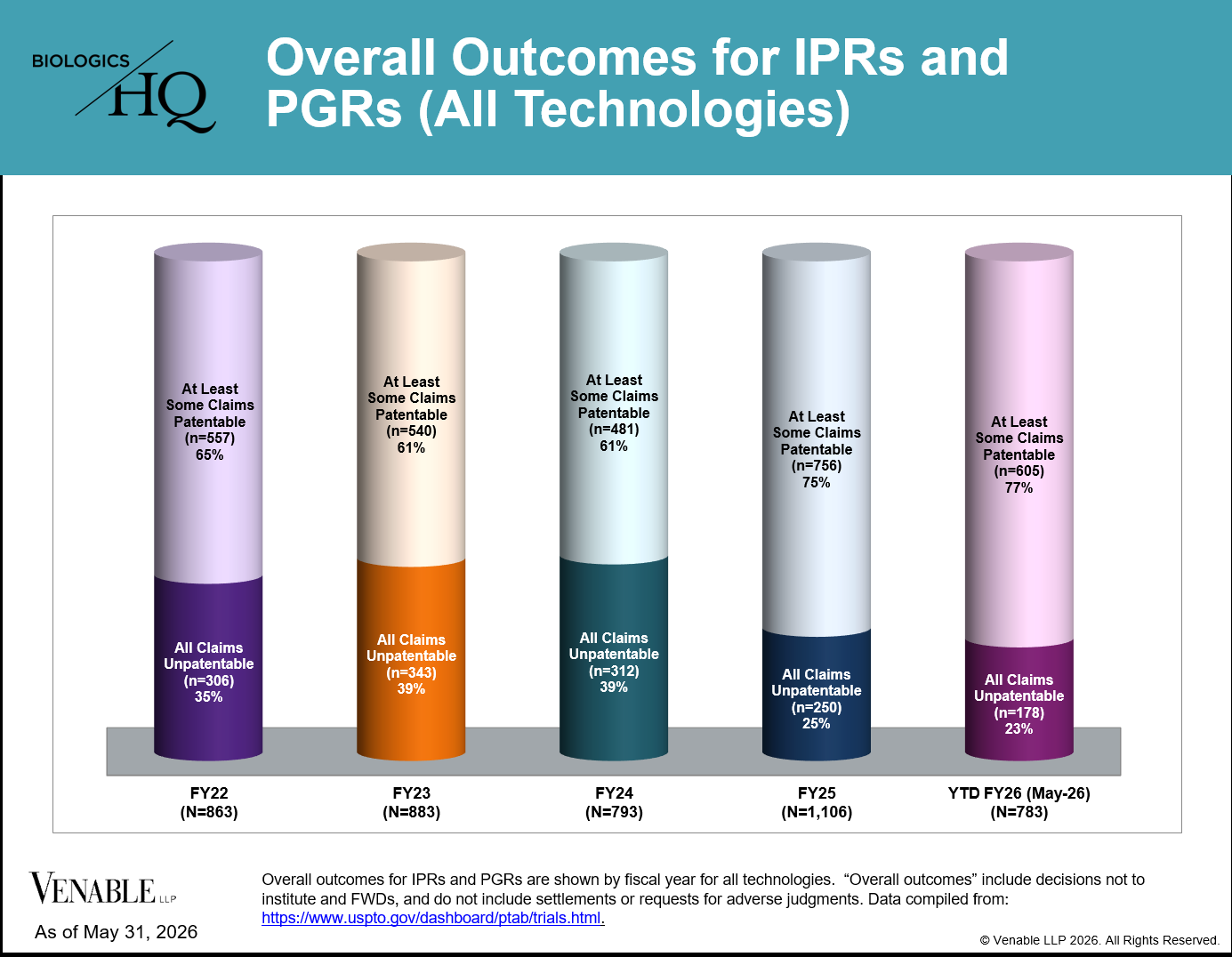
[Figure 6: Overall outcomes for IPRs and PGRs are shown by fiscal year for all technologies. “Overall outcomes” include decisions not to institute and FWDs, and do not include settlements or requests for adverse judgments. Data compiled from Patent Trial and Appeal Board (PTAB) Dashboard | USPTO through May 31, 2026.]
The pro-patent trend has not been as clear for pharmaceutical patents however. Overall outcomes have remained relatively steady despite the changes at the PTAB and were more petitioner-friendly during Director Stewart’s time leading the office (see Figure 7). Where previously Bio / Pharma claims were more likely to survive AIA proceedings than patents as a whole, that has now reversed and they are less likely to survive an AIA challenge. It should be noted however, that the numbers are very small in comparison to technologies as a whole. The low numbers can be impacted by things like a number of petitions challenging similar patents for one drug. Since they often all have the same outcome in the same year, it can skew the statistics toward the outcomes for that particular product. A recent example is related to patents alleged to cover Keytruda Qlex™ (pembrolizumab; berahyaluronidase alfa-pmph). There have been 15 PGRs filed on related patents and all but one has been instituted. The four that have reached FWDs have found all the challenged claims unpatentable.
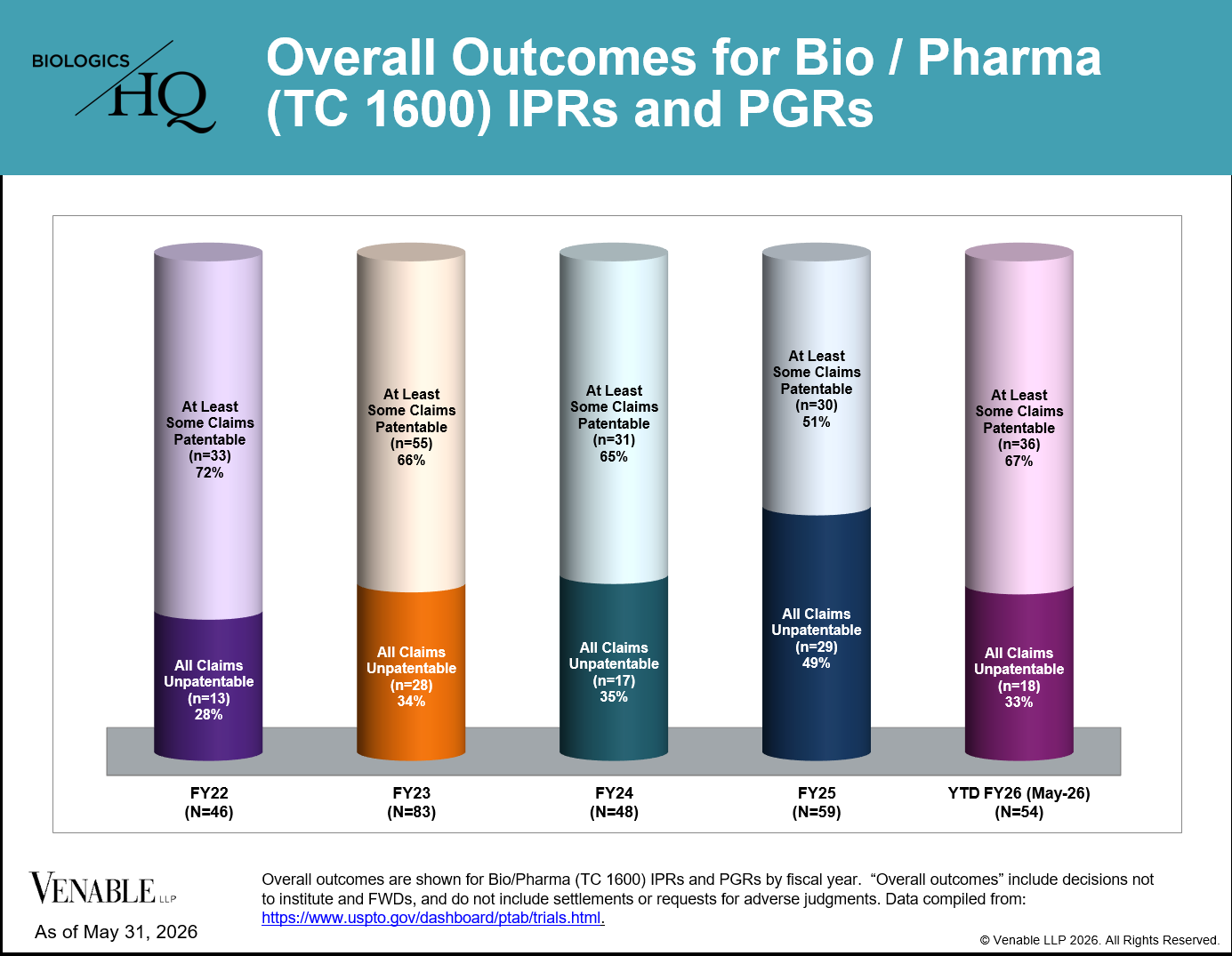
[Figure 7: Overall outcomes are shown for Bio / Pharma (TC 1600) IPRs and PGRs by fiscal year. “Overall outcomes” include decisions not to institute and FWDs, and do not include settlements or requests for adverse judgments. Data compiled from Patent Trial and Appeal Board (PTAB) Dashboard | USPTO through May 31, 2026.]
Impact on Reexam Requests
While patent challengers have not seemed to shift from IPRs to PGRs, we have seen an increase in ex parte reexamination requests across all technologies starting in the last quarter of 2025, which coincides with the decrease in IPR filings (see Figure 8).
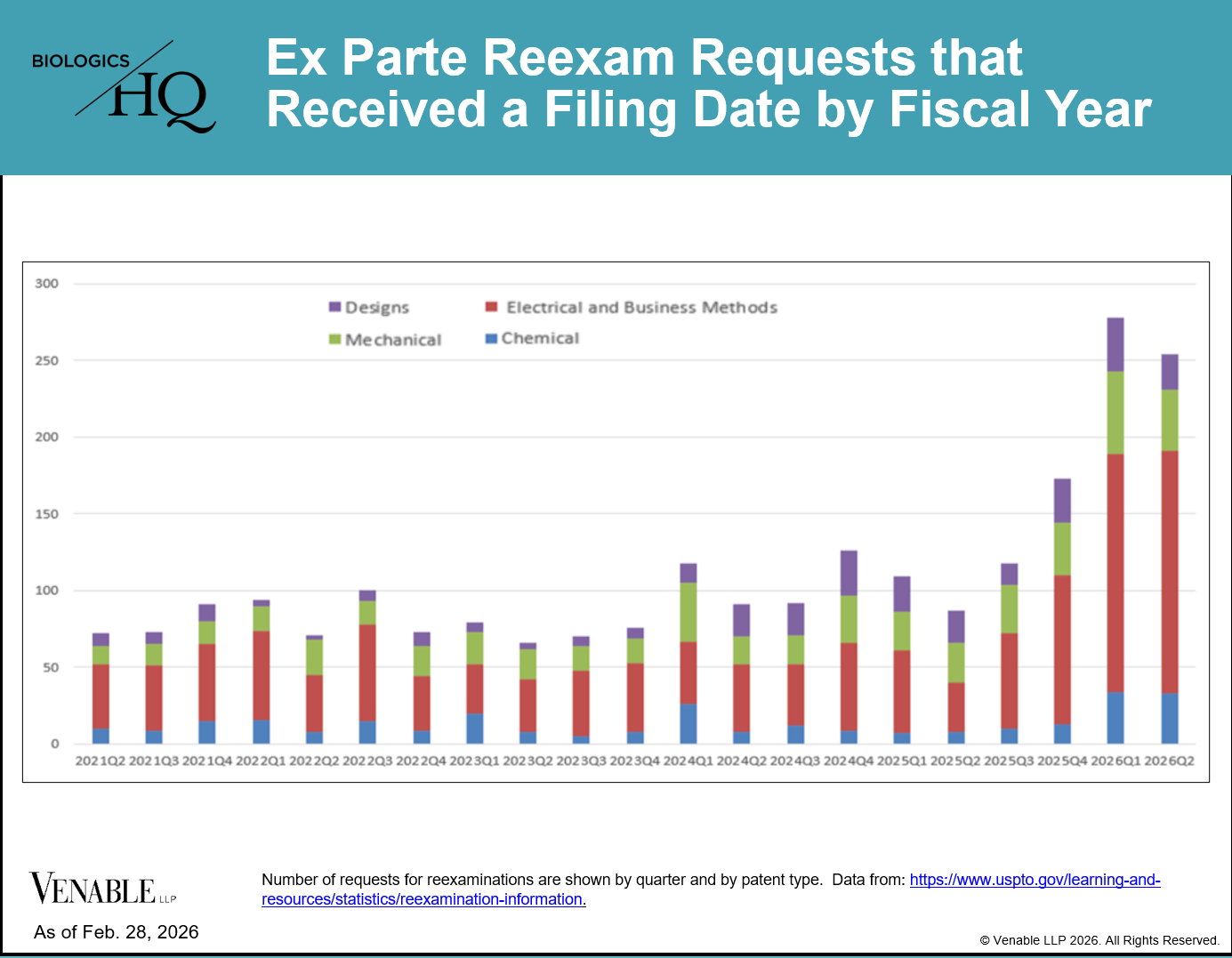
[Figure 8: Number of requests for reexaminations are shown by quarter and by patent type. Data from Reexamination Statistics | USPTO through February 2026.]
Ex parte reexamination requests have a number of advantages compared to filing an IPR or PGR. They have no page limitations on the request, they have generally had a very high institution rate of approximately 93%, they avoid the broad estoppel associated with IPRs and PGRs, and they avoid some of the discretionary denial factors that prevent IPR institutions. However, the requester has a very limited role once the request is filed.
In response to the increased volume of ex parte reexam requests, beginning April 5, 2026, Director Squires also made pro-patent modifications to the ex parte reexam process through an Official Gazette Notice. Under the previous system, the Director had three months to decide whether the request raised a substantial new question of patentability (“SNQ”) and the patent owner did not have an opportunity to respond until after this determination and institution of the reexam proceeding. Under the new system, the patent owner can file a “pre-order paper” of up to 30 pages explaining why the request does not raise a SNQ, along with supporting declarations. The requester will not ordinarily be permitted to respond but may be granted an exception “such as to address alleged misrepresentations of fact or law or other improper arguments that materially impede the determination of a substantial new question.” If granted an exception, the requester would be allowed to file a 10-page response to the pre-order paper.
While this new procedure may be temporary due to the increased filings, the Notice indicated that, “[s]hould the pre-order papers prove helpful, the Office will consider revisions to the rules.” The ability of the patent owner to respond to the request and make institution an adversarial process instead of one-sided, is likely to lower the very high institution rates and may make ex parte reexam requests a less attractive alternative to IPRs.
Recently, the PTO proposed a rulemaking change that would require reexamination petitioners to identify themselves and their interested parties to the office, while allowing such information to be withheld from the public. Currently, petitioners and their interested parties can remain anonymous to both the agency and the public.
The change to the ex parte reexam procedure may lead to a decrease in settlements as well, considering more cases settled during reexam (about 60%) than IPRs and PGRs (previously about 29%, and currently about 14% (see Figure 4 above)).
Conclusion
The pendulum at the PTAB has swung far in the opposite direction from the patent “death squad” it was once called by Justice Rader and is now decidedly more patent friendly under the current Director. Patent owners may benefit from fewer duplicative challenges across forums as Director Squires works toward his goal and petitioners become more selective in their patent challenges at the PTO. Whether the pendulum will swing again in a future administration is yet to be determined, but the overall effect now is that IPR petitioners are choosing to be more selective in how and where they challenge patents at the PTO.
For more information on biosimilars and related patent proceedings, please visit BiologicsHQ.com.
_____________________________________________________
The author would like to thank April Breyer Menon for her contributions to this article.
[1] Because PGRs can only be filed for the first nine months after patent grant, this factor is not generally relevant.
[2] “Biologic drug” patents refer to patents related to CDER-listed biologics.
[3] See e.g. IPR2025-00601 Patent Owner Request for Discretionary Denial, Paper 6 at 42-42 (P.T.A.B. Jun. 10, 2025) (emphasis added): “The ’320 Patent issued more than seven years ago on January 2, 2018. EX1001. Its related family members were the subject of well-publicized litigation between BMS and AstraZeneca beginning in March 2022. EX2020 (providing a link to complaint); EX2021 (complaint asserting patents in Cogswell family). Had Amgen wanted to avoid addressing the ’320 Patent through the BPCIA, it could have filed its IPR much sooner—it began Phase III clinical trials of its OPDIVO® biosimilar on July 26, 2023. EX2006; see also Irhythm Techs., Inc. v. Welch Allyn, Inc., IPR2025-00363, Paper 10 at 3 (P.T.A.B. Jun. 6, 2025) (exercising discretion to deny institution based on settled expectations of the parties).”
Notably the IPR2025-00603 briefing did not contain the single sentence stating when the patent issued, which appears to be what the Acting Director relied on in determining discretionary denial was appropriate in IPR2025-00601 and IPR2025-00602.
[4] “Bio / Pharma” refers to patents in Tech Center 1600, which includes Orange Book and biologic drug patents, in addition to other life science and organic chemistry patents.
[5] Bio / Pharma (TC 1600) data is collected from Patent Trial and Appeal Board (PTAB) Dashboard | USPTO.
